St. Mark’s Basilica
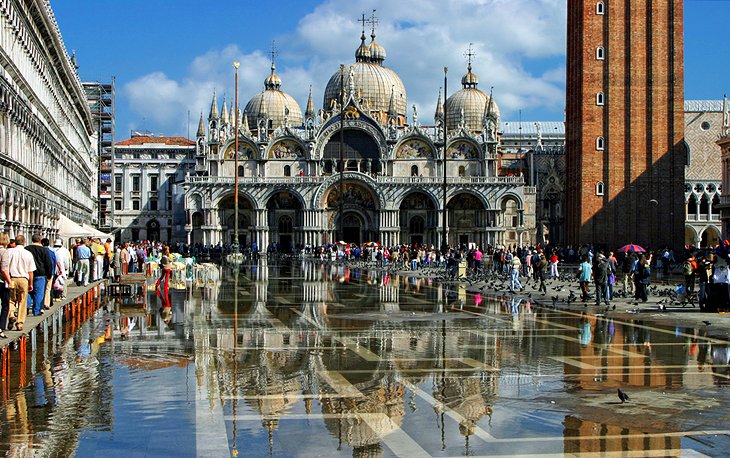
Certainly Venice’s best-known church, and one of the most easily recognized in the world, St. Mark’s Basilica (Basilica di San Marco) was originally the Doge’s private chapel, decorated with Byzantine art treasures that are part of the booty brought back by Venetian ships after the fall of Constantinople. The gold-backed mosaic pictures above the doorways on the façade only hint at the mosaic artistry inside, where 4,240 square meters of gold mosaics cover the domes and walls.
Palazzo Ducale (Doge’s Palace) and Bridge of Sighs
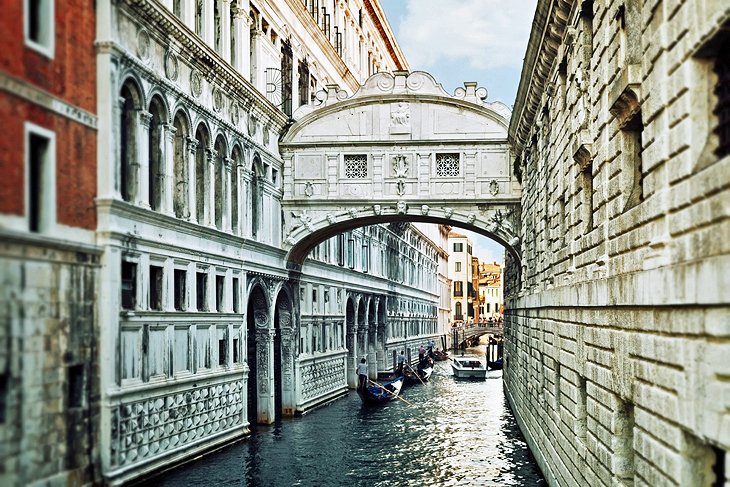
Visitors arriving in Venice once stepped ashore under the façade of this extraordinary palace. They couldn’t have failed to be impressed, both by its size and the finesse of its architecture. If they were received inside by the Doges, the impression would only strengthen as they entered through the Porta della Carta, a perfect example of Venetian Gothic at its height, and ascended the monumental Scala dei Giganti and the gold vaulted Scala d’Oro to be received in what many consider to be the palace’s most beautiful chamber, Sala del Collegio. Even jaded 21st-century travelers gasp in awe at the palace’s grandeur and lavish decoration.
Canale Grande (Grand Canal)
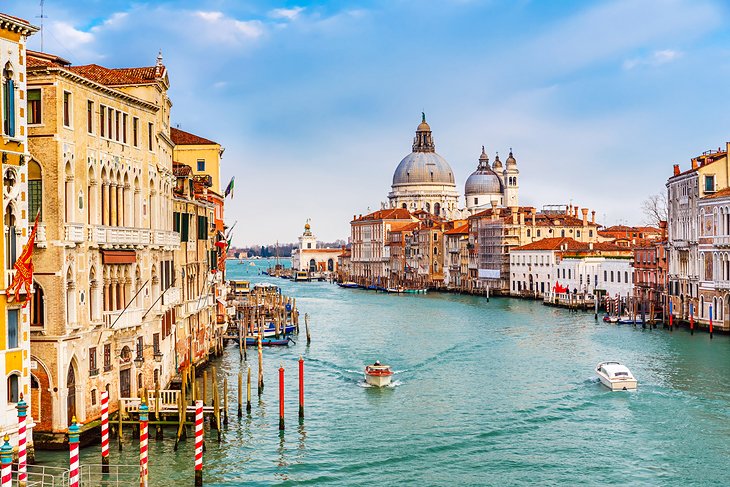
Sweeping through the heart of Venice in a giant reverse S curve, the Grand Canal is the principal boulevard through the city, connecting Piazza San Marco, Rialto Bridge, and the arrival points of the rail station and bridge from the mainland. Only four bridges cross its 3.8-kilometer length, but stripped-down gondolas called traghetti shuttle back and forth at several points between bridges.
Ponte di Rialto (Rialto Bridge) and San Polo
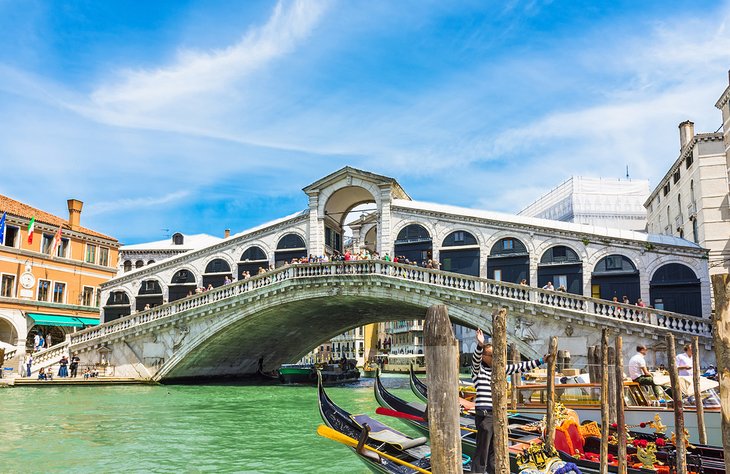
Once the only bridge across the Grand Canal, Rialto Bridge marks the spot of the island’s first settlement, called Rivus Altus (high bank). Built in 1588, some 150 years after the collapse of a previous wooden bridge, this stone arch supports two busy streets and a double set of shops.
Santa Maria Gloriosa dei Frari
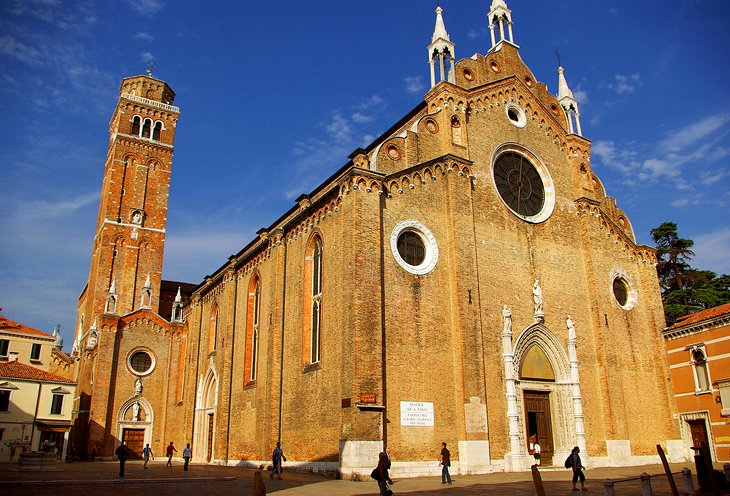
This Gothic church was begun by the Franciscans about 1340 and finished with the completion of the facade, interior, and two chapels in the middle of the 15th century. Its impressive 14th-century campanile is the second highest in the city. Although the interior is in keeping with the simple unadorned style of Franciscan churches, it contains a wealth of artistic treasures.
 An Endless Journey